A few days ago I shared a video of an AI Agent hosting a benefit entitlement interview. The AI Agent intuits a lot in the course of this conversation, but still has to ask loads of tricky financial questions about earnings, rent, existing benefits etc. Mistakes are inevitable, often causing huge headaches.
But what if the claimant didn’t have to dig out all this financial data themselves?
If they have a bank account (and many don’t) then could you ask another AI Agent to look through your bank statements and intuit the financial data it needs to assess the citizen’s entitlement to benefits?
So I did an experiment. I found some old bank statements from a close relative who had sadly now passed away. I asked an AI Agent (Claude Cowork Opus4.6) to infer relevant financial information in these statements. I then asked another to share only the data needed by the MissingBenefit MCP server to assess any potential benefits entitlement.
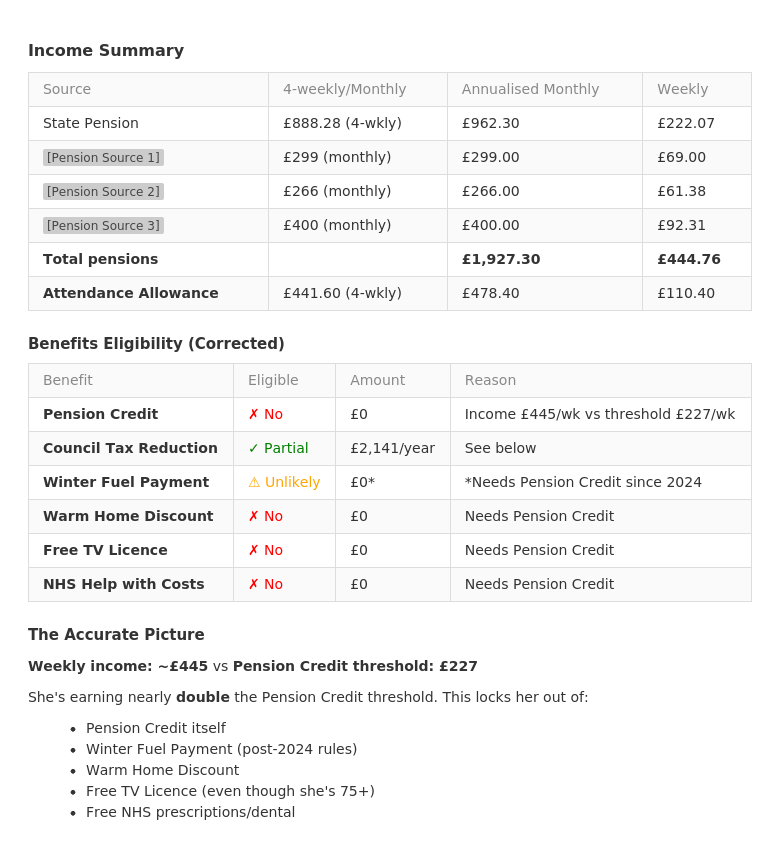
The results were fascinating. The AI Agent easily picked out sufficient financial information to know that she would not have been entitled to Pension Credit. But also intuited a lot more, notably that she was in a care home and hence didn’t need to pay council tax etc.
It made one small mistake, failing to realise that the state pension is paid every 4 weeks, rather than monthly – probably because I didn’t give it consecutive statements.
But sharing photos of bank statements is really not the way to do this – it’s clunky and insecure. And there’s a much better way – Open Banking.
The UK is globally blessed with a mature, comprehensive system whereby all banks have legally mandated interoperable APIs. A real version of such a seamless benefits entitlement service could easily plug into all banks, with the consent of the citizen.
So citizens could give consent for their AI Agent to use Open Banking to analyse their entire financial situation, and then share only what is relevant with the AI agent doing the benefit entitlement.
You’d want the first agent to be acting unambiguously on behalf of the citizen, and the other acting for government. That split of roles will need some institutional innovation (hello Citizens Advice!) It reinforces the point I made a few posts ago about needing new, more flexible legal frameworks for acting on behalf of others.
I’m sure others have already worked all this stuff out, but it’s fascinating to learn it myself through playing around.
 Tom Loosemore
Leave a comment