A bunch of large banks from around the world have published a list of principles for trusted agentic commerce. It’s short, sensible and reasonably readable. Their first principle poses the crunchiest question:
“1.1 𝘈𝘭𝘭 𝘱𝘢𝘳𝘵𝘪𝘦𝘴 𝘪𝘯𝘷𝘰𝘭𝘷𝘦𝘥 𝘪𝘯 𝘢𝘨𝘦𝘯𝘵𝘪𝘤 𝘤𝘰𝘮𝘮𝘦𝘳𝘤𝘦 𝘴𝘩𝘰𝘶𝘭𝘥 𝘣𝘦 𝘢𝘸𝘢𝘳𝘦 𝘸𝘩𝘦𝘯 𝘢𝘯 𝘈𝘐 𝘢𝘨𝘦𝘯𝘵 𝘪𝘴 𝘩𝘦𝘭𝘱𝘪𝘯𝘨 𝘵𝘰 𝘮𝘢𝘬𝘦 𝘰𝘳 𝘧𝘢𝘤𝘪𝘭𝘪𝘵𝘢𝘵𝘦 𝘢 𝘵𝘳𝘢𝘯𝘴𝘢𝘤𝘵𝘪𝘰𝘯, 𝘢𝘯𝘥 𝘰𝘯 𝘸𝘩𝘰𝘴𝘦 𝘣𝘦𝘩𝘢𝘭𝘧 𝘵𝘩𝘦𝘺 𝘢𝘳𝘦 𝘢𝘤𝘵𝘪𝘯𝘨.”
It’s still up in the air as to whether those building agents will adopt the seemingly obvious principle of telling services that they’re a software agent acting for a human. Do you know an agent is an agent? And if not, 𝘤𝘶𝘪 𝘣𝘰𝘯𝘰?
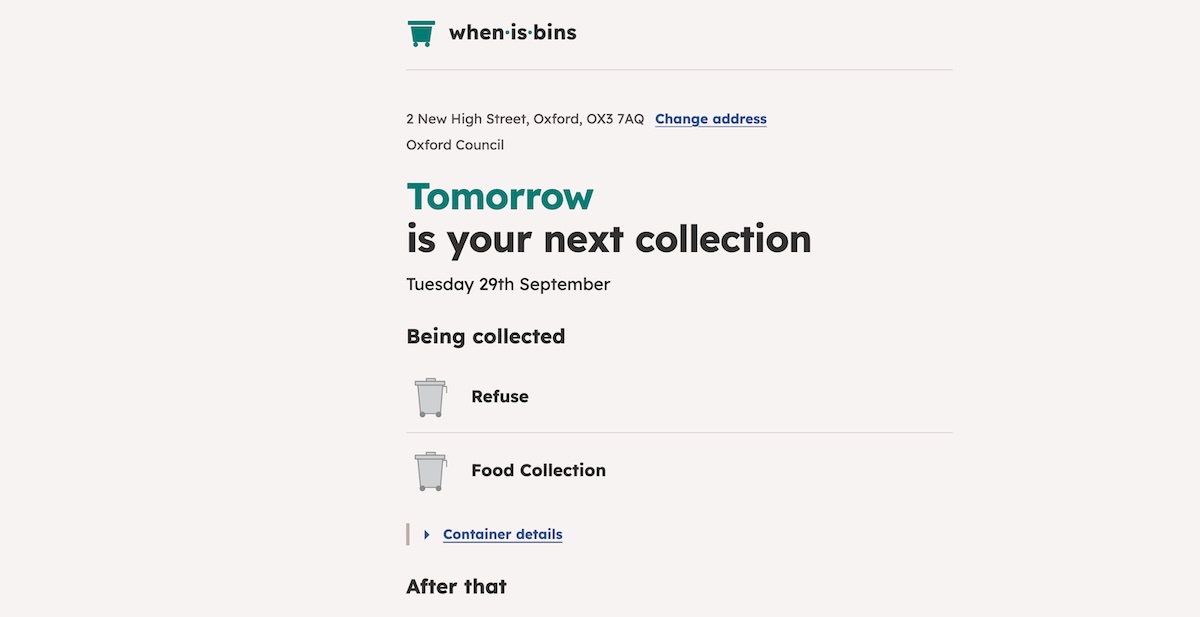
I’ve built a tool called WhenIsBins for finding out UK bin collection dates. I’ve done so in order to to help me understand agent-related questions like this.
Over the weekend I asked a friend in the US to use Meta’s new Muse personal AI agent to find his UK-based brother’s bin collection dates. Muse had the choice between using the WhenIsBins website, the WhenIsBins API and the supposedly agent-friendly WhenIsBins MCP server.
It chose to use the web version and navigated it as if it were a real person. It did not declare that it was an agent. Others who have looked more deeply suggest that Muse goes out of its way to hide the fact it’s an agent visiting your service. I can’t access Muse in the UK yet, but if that the case that’s… that’s not ideal.
This lack of transparency is the public reason Amazon gave for blocking Muse. And there are lots of reasons why Muse might behave like this, liability being right up there – or rather the avoidance thereof.
But I hope we don’t see an AI-powered arms race between agents pretending to be people and services trying to block agents pretending to be people.
That’s a conflict in which citizens and consumers are guaranteed to end up as losers.


Leave a comment