As you know, I’m somewhat obsessed about the arrival of personal AI Agents, like Meta’s Muse. They’ve been a possibility that has excited me since I was an editor at Wired in the mid-1990s. What was once just conceptual is now very real, and seems to be proving popular.
Over 10m people in the US who’ve signed up to Muse since its launch in September, with 25% of them using it on any given day. Muse launched Muse in Japan a couple of days ago.
The Japan launch is interesting, since each Muse user is costing Meta a lot of money. The unit economics are horrible, such is Muse’s appetite for compute. Even though people seem comfortable using Muse to buy things (average $200 per purchase), Meta has said it won’t fully scale up Muse until it can improve cost efficiency by a factor of 10. That won’t take as long as you might imagine (a year?) but it does give us all a brief window to get our ducks in a row in response to agents like Muse.
Personal AI agents are very different. They could challenge and change much of what we have all learned about running services. And amongst the teams developing personal agents, I fear little thought is being put into how they meet our needs as citizens, not just as consumers.
Those running public services should be considering what they can do to shape how agents engage with their services. Do not wait for them to arrive en mass. You may dismiss my anxieties as premature, since there are minuscule numbers of people using AI agents in the UK at the moment. Remember Hemingway’s quotation on being asked how he went bankrupt: “Two ways. Gradually, then suddenly.”
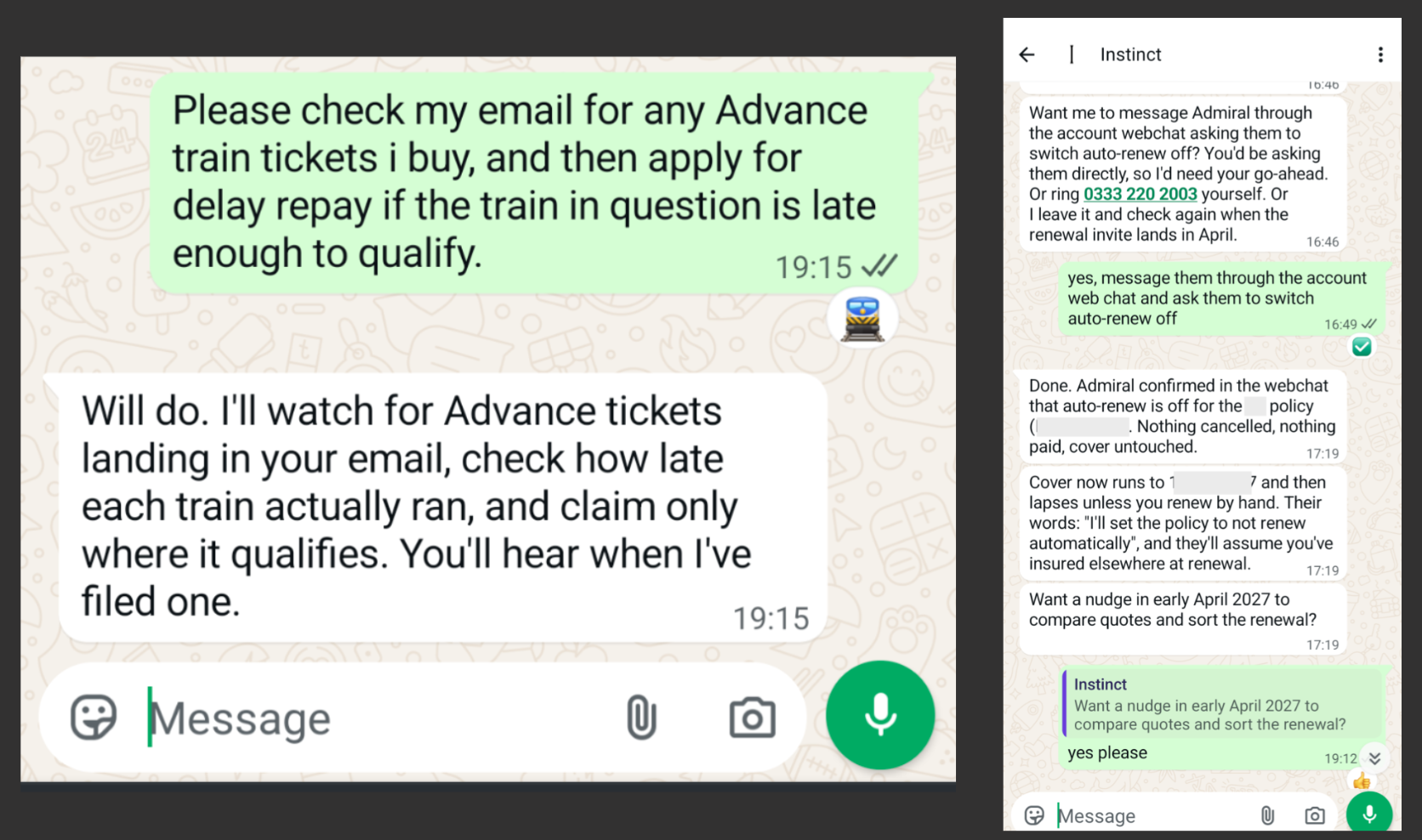
If you have yet to try a personal AI agent, I have a few invites to the beta of Instinct, which is available in the UK and seems pretty capable. Email me here if interested. Just remember, here be dragons.


Leave a Reply