From 1 May 2026* you can appeal if your landlord tries to increase your rent. A tribunal then determines the fair rent.
I think the intent behind this policy is pretty admirable. I also think it’s doomed in its current form. AI Agents like Meta’s Muse will make it unsustainable for taxpayers and landlords alike.
Even today, each decision takes an average of more than 4 months. Critically, you don’t have to pay any increased rent while the tribunal is making up its mind.
The average rent in England is around £1,500/mth and rising 4% a year. Given it costs £47 to apply, the maths is very much in favour of tenants taking up their right to appeal any proposed rent increase, even if they have a very weak case.
Applying for what’s called an Open Market Rent Determination is still a bit intimidating for many. And it’s a lot of hassle to gather evidence for your case by digging around in your email for tenancy agreements and evidence of chasing the landlord to repair stuff they repeatedly ignore etc.
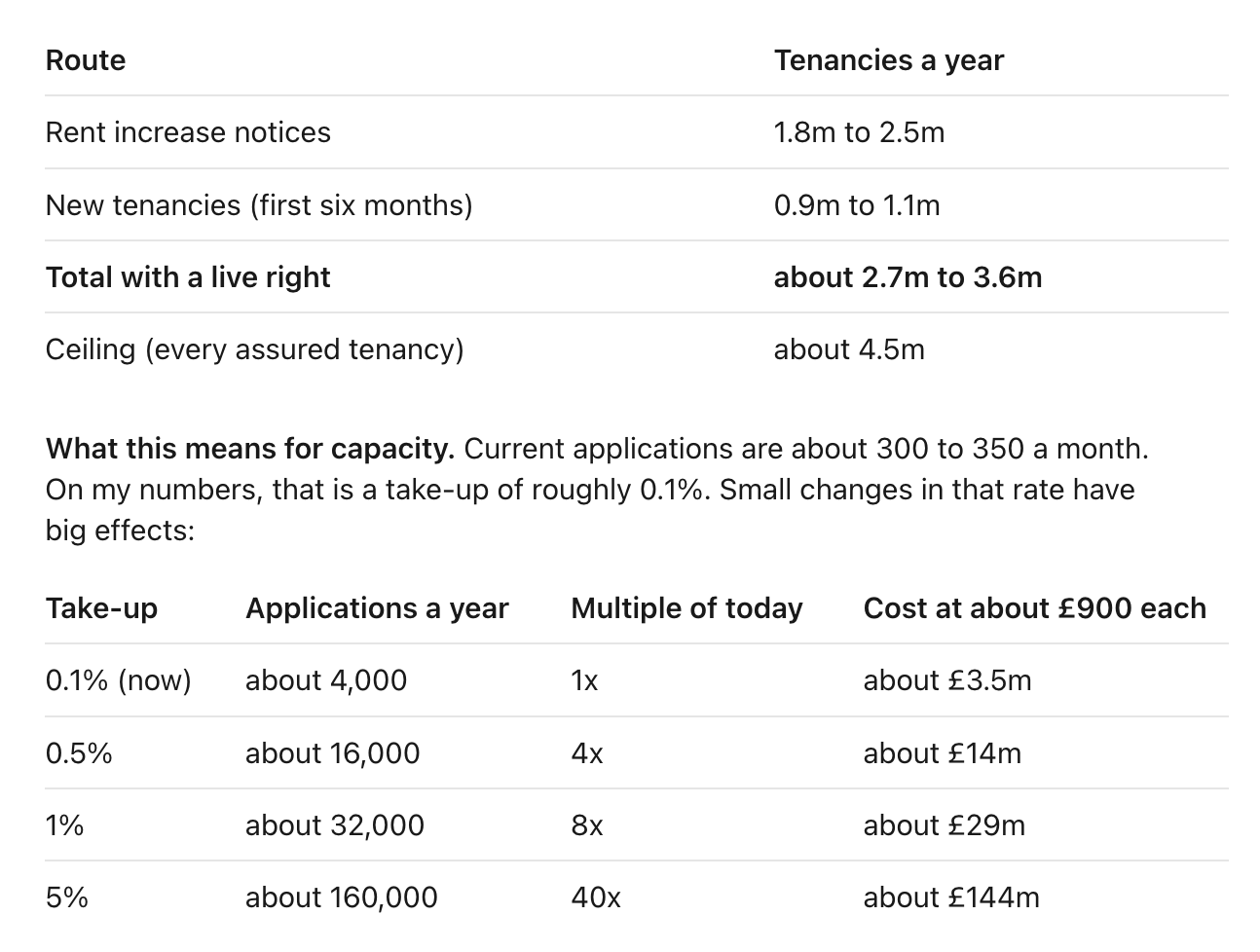
So it’s unsurprising that currently only roughly 0.1% of tenants bother to use their right to appeal an increase in rent. The friction of the process puts the vast majority of them off, even though financially it’s usually a no-brainer to apply.
I’ve written a lot before about how AI stops friction being a constraint on demand.
Citizens are increasingly using AI to help them engage with the state. So that 0.1% number is only going one way. And that’s before personal AI Agents start launching for real early next year. Based on my experiments over the past couple of days, even today’s AI Agents will pretty much do the whole process for you if you let them access your messages.
And that 0.1% doesn’t have to rise by much to make the whole process melt down. More demand for determinations of rent means ballooning delays and exploding costs for both landlords and the taxpayer in general. I’d estimate each determination costs the taxpayer around £1,000 at present, and each month’s delay means landlords don’t get their increased rent.
The Government knows there is already an issue. In September they announced that the Valuation Office (HMRC) will at some point take over responsibility for these rent determinations from the HMCTS tribunal so that “challenges to proposed rent increases are determined faster”.
I suspect tweaks to the process won’t be enough; at its core, the current policy assumes that the friction of a formal process will put off most tenants from taking up their right to appeal.
AI changes that political equation. AI Agents are not intimidated by long words in scary-looking processes. They’ve got all the time in the world. And they’ll know every trick in the book both to maximise a tenant’s chances of winning and drag out the determination process for as long as possible, as delay will likely be in the tenant’s interest.
To see what I mean, here’s a demo I knocked up on a flight back from Denmark yesterday. It’s how AI could help a tenant maximise their chances of a rent determination going in their favour.
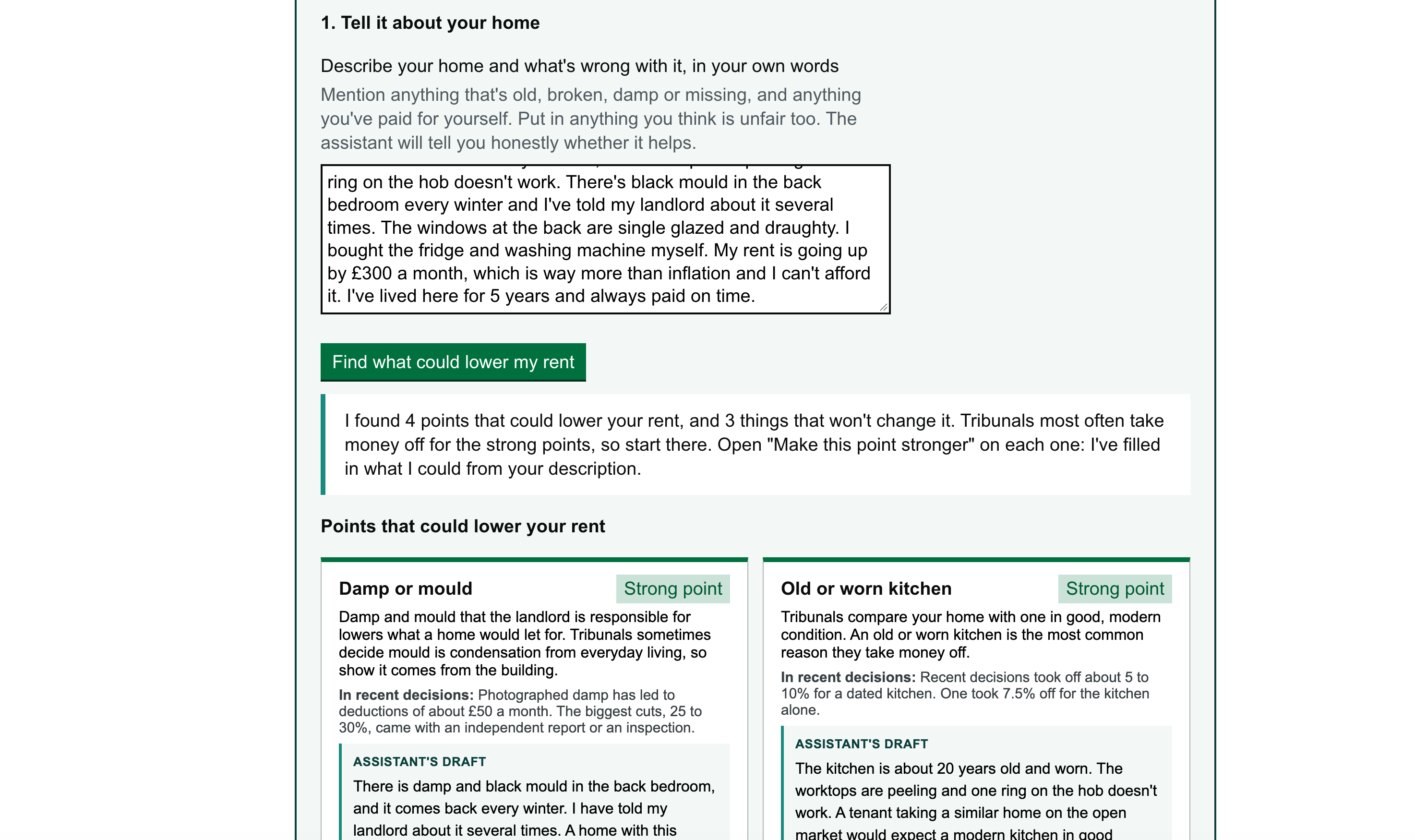
Note that my demo is still in the form of an old-fashioned website. The kind of personal AI Agents that Big Tech will start launching in the UK next Spring will do pretty much all of this for you with minimal clicks and taps.
Policymakers: please stress test your current and forthcoming policies against a scenario whereby AI removes the friction caused by citizens’ lack of time, lack of knowledge or lack of confidence. Kinda, like, right now?
And don’t worry, I’m not going to make that demo properly live. But it’d only take someone a couple of days to do so – also thanks to AI.
The vertigo continues.
* The Renters’ Rights Act 2025 received Royal Assent on 27 October 2025, with its first major phase taking effect on 1 May 2026 for private tenancies in England. It followed the Conservatives’ Renters (Reform) Bill, which fell when the 2024 election was called. Labour brought it back before Parliament that autumn.


Leave a Reply